
 +1-713-304-6013
The construction industry started March with a strain, yet it was something more that ensued. There were already costs that were above pre-2020 levels because of the shortage of workforce and unstable supply chains. Contractors were dealing with these problems through prudent planning, enhanced purchasing, and tight budgeting. But all this was changed by the sudden upsurge in oil prices. It drove the expenses up in many different locations within a very limited period, leaving little room to alter.
This rapid change in the cost of energy was a domino effect in the whole construction ecosystem. Almost all cost elements, such as fuel, materials, and logistics, were impacted. The fact that this situation was not only increased, but rather rapidly increased, made this situation even more difficult. Contractors working under the assumption of stability were now confronted with cost spikes of unpredictability, and that had a direct effect on project budgets and schedules.
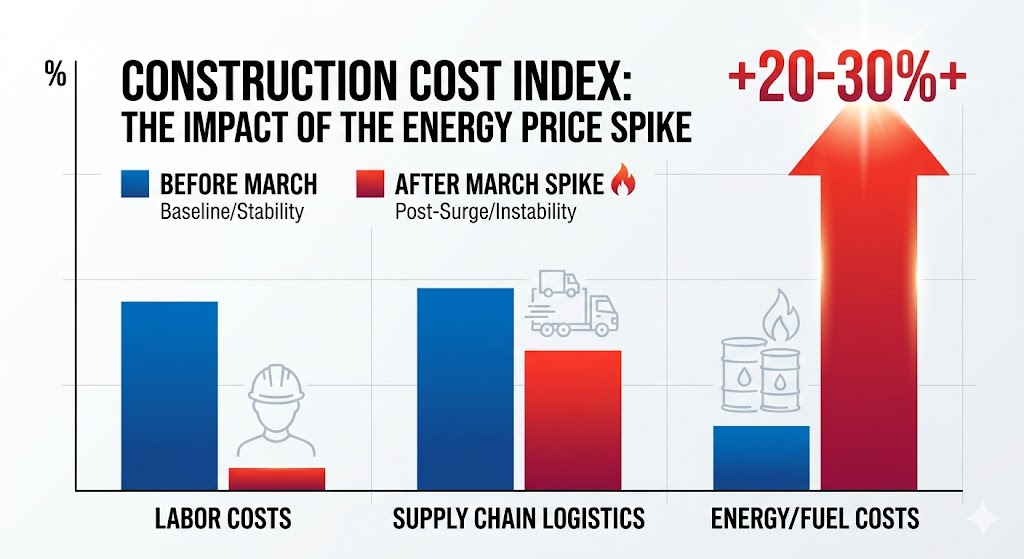
What Caused The Unexpected Oil Price Spike
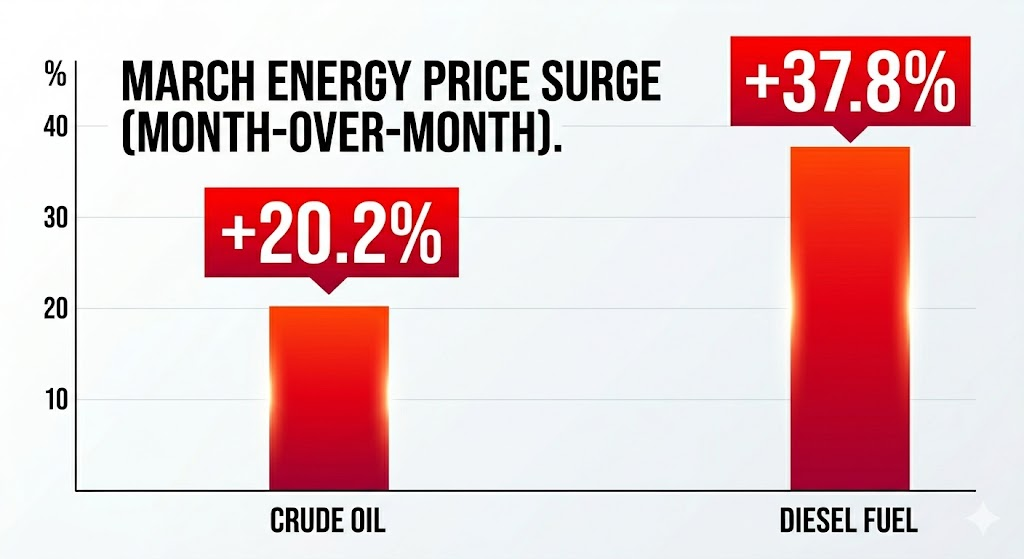
The increase in oil prices in March did not occur by chance. It was propelled by a combination of uncertainties across the world and disruptions in supply. The instability in the supply chains was caused by the tensions in the major oil-producing areas, and further strain was caused by disruptions in shipping routes. Consequently, this made crude oil prices shoot by 20.2 percent in a month, which is a tremendous rise in such a short time span.
This growth had even greater ramifications than fuel prices. Many construction materials are major inputs of oil, and hence their price directly impacts the cost of manufacturing. An increase in the price of crude oil increases the cost of manufacturing materials such as insulation, roofing membranes, and synthetic components. This results in a trickle effect that is delayed but far-reaching and extends across the supply chain.
The other factor is the uncertainty of the period of these high prices. The suppliers tend to increase prices rapidly when the markets are volatile in order to cushion their margins. This puts a scenario in which the contractors are thrown into a scenario of experiencing the cost increment immediately, without sufficient time to act and make adjustments to their strategies.
The Direct Effect Of Diesel Prices On Construction
Diesel is a key aspect of construction activities. It drives heavy equipment, transportation equipment, and on-site generators. The impact is direct and inevitable when the prices of diesel shoot up. Diesel prices have soared by 37.8 per cent in March, compared to the previous month, and it is one of the largest increases in decades.
This spike directly brought about the high cost of operating construction equipment. Excavators, cranes, and loaders are some of the construction machines that rely on the use of diesel, and the increased fuel prices translate to increased operating costs each day. The increase in cost is immediately experienced since these machines are at work over running projects.
Also, the cost of transportation increased in conjunction with the price of diesel. The transportation of materials to construction sites was costlier, and the transportation of equipment among sites caused further financial burden. Even the cost of production of concrete has risen since readymix trucks require the use of diesel fuel. All these effects compounded to a scenario where virtually all the activities on a construction site would be costlier overnight.
The Impact Of Oil Prices On Construction Materials
Oil is not only used as a fuel, but a major component of most construction materials. Asphalt, PVC pipes, insulation, and adhesives are products that are directly associated with petroleum. As the price of oil goes up, it almost doubles the price of producing such materials.
Indirect impact on energy-consuming materials, i.e, steel, cement, and glass, also exists. During the manufacturing of these materials, a lot of energy is used. With the increase in the cost of energy, the cost is transferred to purchasers by manufacturers. This leads to a second spiral of price rise, which tends to emerge a few weeks after the first oil spike.
This process occurred more quickly than normal in March. Simultaneously, suppliers started to raise the prices on a variety of materials. This eliminated the normal equilibrium whereby certain materials do not change, but others do. This led to an upward revision of the costs of construction materials in total by 4.8 percent per annum, the highest growth in more than a year.
Increased Freight Costs And Fuel Surcharges Bearing Down
Among the consequences of the increase in the cost of diesel (which are less visible, but have a significant impact), one can single out the rise in freight costs. Construction projects are characterized by a regular supply of materials, and transportation constitutes a significant portion of total costs. In case of an increase in fuel prices, the transport companies charge more fuel surcharge to the transport companies to meet their upgraded expenses.
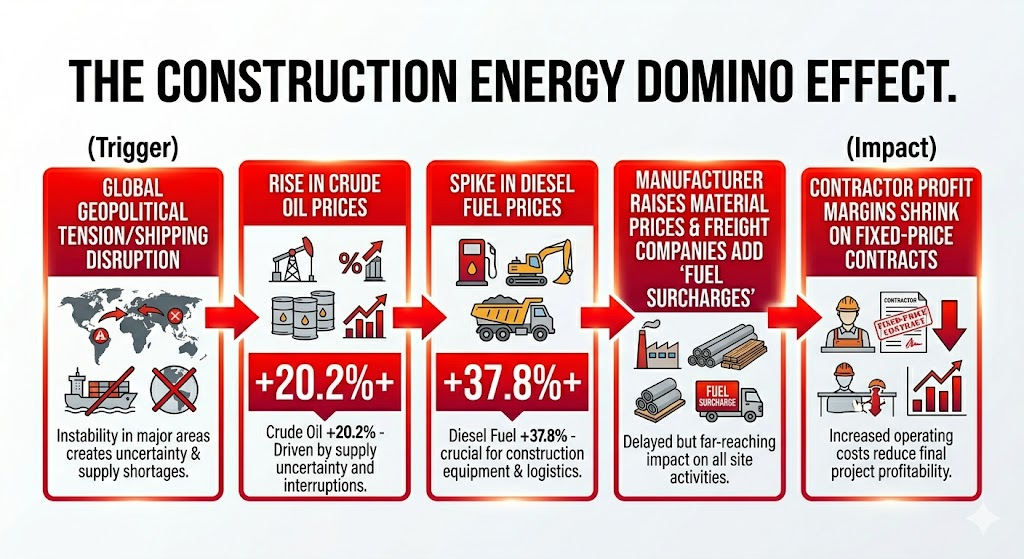
These higher charges are normally modified on a weekly basis depending on the price of diesel. These extra charges soon rose, as the diesel prices skyrocketed in March. In projects where the deliveries have to be made regularly, even a little increase in the surcharge rates results in massive increases in the total costs.
It is even more complicated in the case of international shipping. Any interruption in the trade routes across the world may cause shipments to use a longer and more costly route. This is an additional expense, particularly on materials that are imported. Freight costs are also a significant source of construction budget increase, together with the local fuel cost increase.
New Challenges To Contractor Margins
Although the costs were on the increase, most contractors were initially positive. The high level of demand in projects and the huge backlogs created an illusion that the industry would be able to absorb the temporary costs. This optimism, however coming under pressure with the reality of increasing costs being more evident.
Profit margins start to decline when the costs start rising at a higher rate. Contractors tend to operate within predetermined budgets, and fuel, materials, and logistics costs unexpectedly increase, decreasing their profits. Profitability is unpredictable even in the case of high demand.
Such a discrepancy between expectation and reality may result in long-term issues. When contractors keep operating on optimistic assumptions as the costs keep increasing, the financial strain may accumulate in the long run. Striking this balance is vital in ensuring that it remains stable in a volatile market.
Fixed Price Contracts And The Risk Of Cost Spikes
Fixed-price contracts are prevalent in the construction industry, which is a major problem. These contracts fix the costs of a project before the commencement of the construction, which gives some assurance to the project owners. Nonetheless, they pass the risk of cost increase to contractors as well.
Contractors, in most cases, cannot amend their contracts when the prices soar. This implies they would have to leverage the extra expenses. This can severely minimize or even eradicate profit margins in a case such as that of March, in which diesel prices had gone up by almost 38 percent.
This is aggravated by the fact that a lot of contracts do not contain any escalation clauses. Contractors are unwieldy to market changes as they are not given measures to modify the prices to match these changes. This brings out the necessity of a more flexible contract structure that can adjust to the fluctuating economic conditions.
Reactions Of The Owners And Wide Market Implications
Increased cost of construction not only impact on contractors. Budgets also pose a challenge to project owners who have to increase their budgets. Where costs are more than estimated, owners can postpone the projects, redesign, or abdicate the project altogether.
Such decisions impact the industry. A decrease in the number of projects will lead to a decrease in the demand for materials, equipments and labour. This may slow down economic activity and create uncertainty for businesses that are reliant on construction activities.
There is more than just the effect on individual companies. Construction is significant in the overall economic growth, and any form of disruption in the industry can have impacts on other industries. Slowing down of projects is reflected in supply chains, manufacturing, and employment.
Plans To Cope With The Increasing Construction Prices
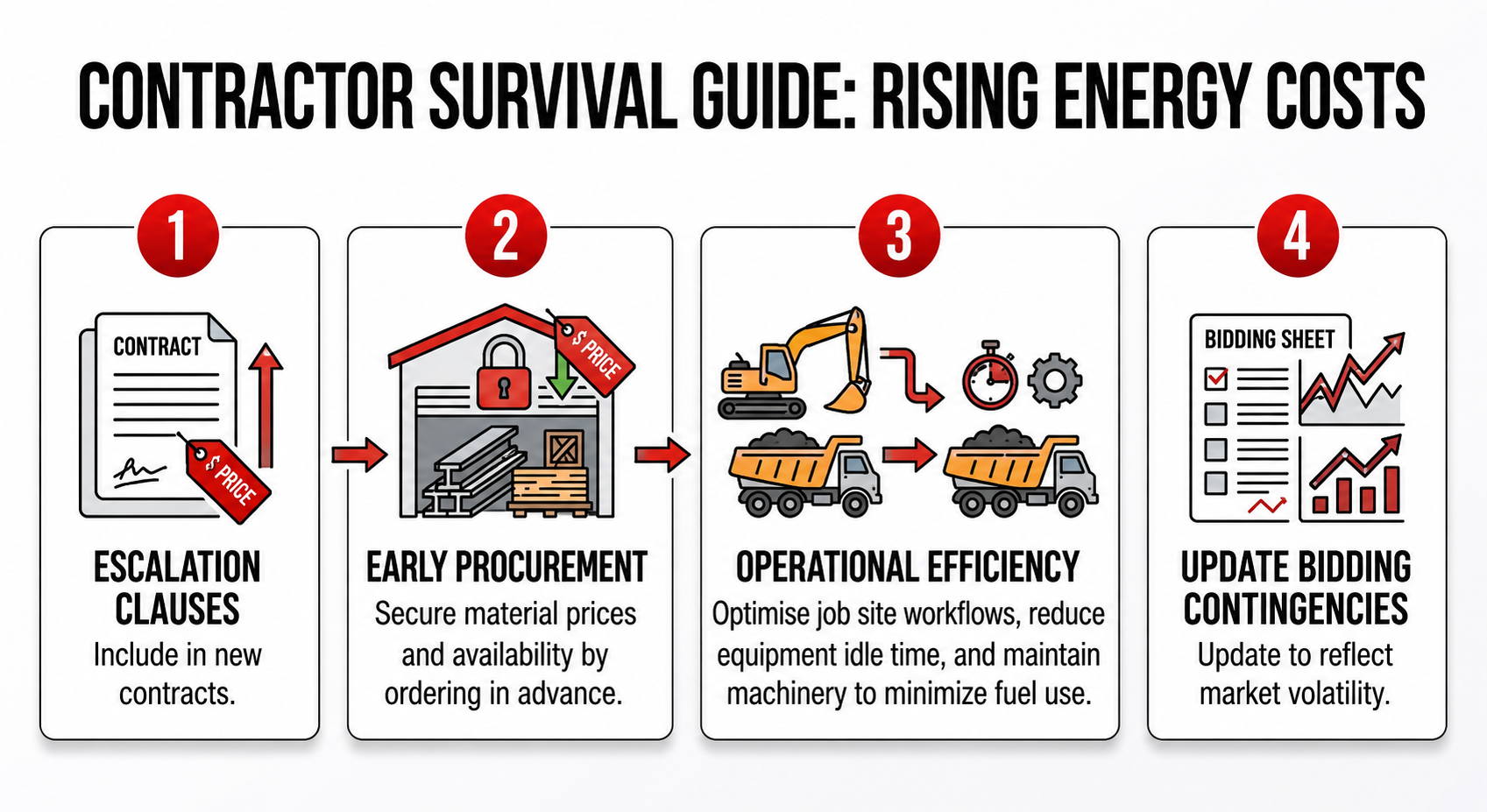
Contractors in a high-cost environment must be able to cope swiftly. The enhancement of contract terms is one of the most efficient ones. Financial risk can be mitigated by adding fuel and materials clauses of escalation. These clauses permit some degree of protection against an abrupt rise in prices by letting the clauses to be modified depending on the market conditions.
The procurement strategies are important too. Costs can be stabilized by the procurement of materials early on or by making long-term supply deals. Contractors are able to mitigate the impact of inflation and have increased control over the project costs, since they can lock in their prices until such time.
Another factor is the operational efficiency. The overall fuel consumption can be minimized with the use of fuel-efficient equipment and optimization of transportation routes. Minor efficiency gains can result in huge savings on costs in the long run.
The financial planning should also be reinforced. Contractors should consider possible changes in price when bidding and running ongoing projects. They can create flexibility in their financial plans, which will enable them to deal with unforeseen market developments.
The Speed Of Cost Inflation And Why It Matters
The rise in cost of March was not only a difficult one, but it was also the speed at which it occurred. Planning, revising contracts, and strategies of procurement can be used to address gradual increases in the cost of construction. But when the spikes are very fast, there is hardly any time to respond. The impact of price increases in a matter of weeks or even days has to be taken up by the contractor almost instantly.
This pace generates a disconnect between reality and planning. Budgets are usually made many months prior to the actual period when they are to be used, and this is usually done depending on the cost assumptions, which are not volatile. When the price of oil and diesel suddenly increases, then such assumptions are becoming obsolete overnight. This strains the current projects, which are being executed because it has no time to renegotiate contracts and readjust the cost structure.
The high rate of inflation is also an issue in decision-making. Contractors will be reluctant to make new purchases in case of a further price increase. Meanwhile, any postponement of decisions may result in even greater costs in the future. This puts the project management in a challenging position where each step will be risky, making project management harder and more unpredictable.
Sensitivity Of The Supply Chain To The Cost Of Energy
The construction supply chain is very susceptible to fluctuation of the energy prices. Energy is consumed at each step, starting with the mining of raw materials, production, and delivery of the product. This is passed down the chain when oil prices increase, it will be felt at every step of the chain.
Increased costs of production arise as manufacturers have to incur costs for energy. This is then transferred to distributors, and the distributors will change their prices. The overall impact of these increases is substantial by the time materials get to the contractors. Such an overlaid effect renders it hard to determine where the cost escalation started, but the outcome is apparent in the final price.
Time is another significant consideration. Responses to different sections of the supply chain occur at varying rates. Other suppliers respond by changing the prices instantly, and others may take weeks before they change their prices. This produces the stagger effect of increased costs to exceed their initial levels with time, even without the occurrence of the first oil price burst. In the case of contractors, this implies that the entire effects are usually experienced over time, prolonging the time of financial strains.
Problems With Equipment Usage And Fuel Economy
The main activity of construction is heavy machinery, whose efficiency contributes significantly to the general expenses. With the escalation in fuel prices, the value of equipment usage is even more significant. Unutilized machines can greatly consume a lot of fuel, hence the operation costs are high.
To maximize the utilization of equipment, it needs to be planned and coordinated. Contractors should make sure that machines are not turned on unless the need arises and when they are in the best condition. Minimization of idle time is encouraged, since the operation of equipment that does not add value to the project wastes fuel and escalates costs, without adding value to the project.
The nature and state of the equipment used also determine the fuel efficiency. The older machines are also likely to use up more fuel, hence are not as cost-effective in the high price environment. This brings a necessity to review equipment fleets and think of upgrading or replacing them whenever feasible. Though such decisions are associated with initial investment, their effects might be saved in fuel expenses in the long run.
Impact On Small And Mid-Sized Contractors
Large construction companies can possibly bear the increase in costs since they have the resources; smaller contractors are more challenged. Lack of financial reserves and stricter margins make them hard to deal with sudden influxes in costs. To these businesses, a slight change in fuel or material costs can be very influential on profitability.
The small and mid-sized contractors tend to have short-term contracts and are less able to bargain with the suppliers. This will imply that they are more susceptible to price changes and are less capable of negotiating good terms. Since the expenses are increasing, they might not be able to sustain their businesses or compete with bigger companies that are more flexible.
The scenario may result in a decline in engagement in new projects since the smaller contractors will be wary of assuming financial risk. This has an impact on the competition in the industry and may result in reduced choices for project owners. The imbalance may, over time, redefine the market to the benefit of the bigger companies and at the expense of small players.
Psychological Effect On Industry Decision Makers
In addition to financial factors, the high pace of cost inflation also influences the decision-making attitude of decision-makers in the construction sector. Pricing uncertainty poses stress and uncertainty, which affects the attitude of contractors, heavy equipment suppliers, and owners towards their projects.
Costs are unpredictable, which reduces confidence in planning. The decision makers can postpone approvals, minimize project scope, or even evade long-term commitments. This suspicious strategy may slow down the project development and slow down the industry.
The psychological consequence is also applicable to risk tolerance. Firms that formerly had been ready to undertake large projects may now be more conservative, doing smaller or simpler work. Such behavioral change has the potential to alter the general trajectory of the industry, as there are fewer megaprojects in the future at times of great uncertainty.
Dependence On Energy And The Limits To Alternatives
The March cost increase emphasized the over-reliance of the construction industry on the conventional sources of energy, especially diesel. Alternative energy solutions are being developed, but they have yet to be adopted. Electric and hybrid equipment are being looked into, although there is a small percentage in the overall equipment fleet.
Capacity is one of the key challenges. Numerous alternative energy solutions are not yet able to cope with large-scale construction projects. Machines are very heavy and may need a large amount of power, and the existing options might not have similar performance to those powered by diesel.
Other limiting factors are infrastructure. Electric equipment cannot easily be charged using facilities and support systems, particularly on isolated work sites. This renders it challenging to make a short-term transition to die off. Therefore, the industry is still highly vulnerable to changes in the oil and fuel prices.
Project Planning Implications In The Long Run
March will most likely have an impact on the way construction projects are planned in the future. Flexibility and risk management can be of more importance to the contractors and project owners. This may result in alterations in the contract arrangements, budgeting, and purchasing procedures.
The next project could involve increased contingency allowances to cater to the probable increase in costs. Although this might offer some form of cushion against uncertainties, it increases the total cost of projects. Owners might be required to set up bigger budgets so that projects are able to sustain unforeseen alterations.
The setting of timelines can also be changed. The exposure to price fluctuations can be minimized by shorter intervals between bidding and carrying out the project. The reduction of time between the estimation of costs and the actual work will help the contractors to increase the accuracy of their budgets and lower the financial risk.
The Importance Of Data And Market Monitoring
Where there is instability in the costs, the availability of the correct and prompt data will be necessary. Closely observing the market trends, contractors will be able to make better decisions and react to changes faster. Monitoring the costs of oil, fuel, and the cost of materials enables the companies to predict possible rises and change their plans.
Market data will also help in enhancing communication with the clients and stakeholders. Being able to specify the causes of cost alterations by the contractors will create trust and enhance collaboration. The transparency will be a critical issue in strengthening relationships in uncertain times.
Technology is significant in the process. Digital applications and analytics systems can give real-time information on the market conditions, and contractors can be at the forefront of trends. Using these tools, companies will be able to improve their capacity to deal with risk and be stable in the rapidly changing environment.
Striking A Balance Between Cost Control And The Project Progress
The challenge of keeping up with the advances, but keeping the costs down, is one of the greatest to face during times when costs are on the increase. Work delays may result in a decrease in expenses in the short run, but could increase expenses in the long run as prices increase even more. Conversely, carrying on the work without modifications may strain the budgets and decrease the profitability.
The balance between the two is quite challenging and should be planned and evaluated. Contractors should evaluate what activities should be considered as necessary and which can be changed or postponed. This assists in making sure that resources are utilized effectively without the need to affect the overall project times.
It is also an important process that requires communication. By informing all the stakeholders about cost changes and their effects, it can be better organized to coordinate and make decisions. Once all the involved people are aware of the situation, solutions that will ensure projects continue to run and financial risks are contained will be easily identified.
FAQs
1: What did oil prices skyrocket in March?
Cases of disruptions in supply in the world and geopolitical tensions led to oil prices rising and caused uncertainties and reduced supply in the market.
2: What is so special about diesel in construction?
Heavy equipment, transport vehicles, and on-site operations utilize diesel, which is a very important cost element in construction projects.
3: What materials are the most affected by the oil prices?
Direct materials such as asphalt, PVC, insulation, and adhesives are related directly to oil, whereas steel and cement are indirectly related through the cost of energy.
4: Are the contractors able to pass on the hiked costs to the clients?
In the majority of situations, contractors are not able to transfer these costs because of the contract of fixed prices, in which case they have to absorb the rises.
5: What is the duration of these cost rises?
This time will depend on the world market situation, but expenses will be more stable as soon as the supply chains become better and oil prices are stabilized.
Don’t forget to subscribe to our YouTube channel for more equipment offers and insights into the industry.
 1400 Broadfield Blvd, Houston, TX 77084,
USA.
1400 Broadfield Blvd, Houston, TX 77084,
USA.
 WhatsApp +1-713-304-6013