
 +1-281-934-4000
In 2026, contractors are purchasing construction equipment with greater discipline than in the past. It is becoming less common to replace equipment simply because it appears to be outdated.
These days, purchasers are asking more pointed questions: will this device increase output, safeguard cash flow, and remain active enough to warrant ownership? Construction Equipment For Sale choices are also frequently compared.
The market has changed, thus this question is important. Uneven project pipelines, increased financing costs, and increased demand to maintain fleet efficiency are challenges faced by construction companies. This is why every purchase now gets a closer financial review overall today.
That is the true narrative for readers who are interested in construction equipment. Because every dollar now has to work harder, contractors are making wiser purchases.
These days, the best buy is more than just the newest or cheapest. It helps a workforce do tasks more quickly, cut down on downtime, and manage long-term operating expenses. For this reason, searches for construction equipment for sale are now more specific than they were in the past.
What Is Driving Construction Contractor Purchase Decisions Right Now?
Projects Backlog
One of the main factors influencing equipment purchases is still the backlog of projects. Contractors are more inclined to add equipment that enables them to take on bigger or faster works when they expect consistent work.
However, the backlog is insufficient on its own. Additionally, buyers want to know if they can service the equipment quickly and if it will remain productive throughout the season.
Cost Pressure
Another important factor is cost pressure. Many consumers are now more cautious due to interest rates, inflation, and trade uncertainties. They are not waiting indefinitely. It indicates that people are carefully weighing their options and paying closer attention to monthly payments, fuel consumption, maintenance, and resale value.
Practically speaking, contractors are making choices based on company continuity rather than brand loyalty.
The smartest buyers are also thinking about utilization. They often review Construction Equipment For Sale listings. A machine that sits idle for long stretches is expensive, no matter how good the badge is on the hood. That is why the question is shifting from “What machine do I want?” to “What machine will earn back its cost fastest?”
What Factors Matter Most When Contractors Buy Construction Equipment?
Reliability And Uptime
Even if they don’t express it first, contractors frequently prioritize reliability. The entire schedule is safeguarded by a machine that starts every morning, operates reliably, and doesn’t require frequent repairs. A single malfunction might cause a crew to be delayed, require overtime, and interfere with the remainder of the work. Uptime is therefore more than just a technical metric. It is a measure of profit.
This explains why service access is so important. Even a reliable machine with irregular assistance can turn out to be a terrible purchase. Contractors are looking for equipment that can be fixed quickly, with readily available parts and quick-responding specialists. The actual cost is frequently far more than the repair charge if a machine is unavailable for two days.
Total Cost of Ownership
Contractors who solely concentrate on the acquisition price are typically taken aback later. Fuel, maintenance, repairs, tire or undercarriage wear, operator training, transportation, and resale value are all included in the total cost of ownership. If a machine spends longer time in the shop or burns more fuel, its initial cost may increase.
Here is where seasoned buyers set themselves apart from newbie shoppers. They want to know how much it will cost and how much work it will finish in the next three to five years. In reality, a lot of people begin by comparing the inventory of construction equipment for sale.
Dealer Support And Parts Availability
Whether a purchase feels dangerous or safe is frequently determined by dealer assistance. Contractors want items that are genuinely in stock, fast turnaround, and local service. Additionally, they seek assurance regarding the warranty procedure. A strong dealer makes the machine seem more manageable. Even a good deal might become a pain if there is insufficient assistance.
Financing And Payment Structure
These days, financing is not an afterthought. It is a component of the actual choice to buy. These days, contractors pay great attention to leasing arrangements, down payments, monthly payments, and how each option impacts cash flow. On paper, a machine might be inexpensive, but if the payment schedule puts a strain on working cash, the business as a whole may suffer.
Do Contractors Buy New, Used, Rent, or Lease In 2026?
Though for distinct purposes, they go for all four. For buyers who want the newest technology, a long-term fleet plan, and warranty coverage, new equipment is still the best option. For high-utilization machines that will be in use for years and can support a greater initial cost, it usually makes sense.
Contractors seeking quicker deployment and reduced entry costs are drawn to used equipment. A lot of purchasers look for work-ready items on Construction Equipment For Sale pages. That is the quickest option to increase capacity without having to pay for a new unit in full. That might mean the difference between accepting a work and declining it for smaller contractors.
When a need is temporary, seasonal, or unknown, renting is the ideal choice. When a machine will only be used for a portion of the year, when they require flexibility, or when they wish to avoid investing money in idle assets, contractors rent. Because it enables businesses to manage upfront costs and react swiftly to project modifications, the rental sector is still expanding.
In between purchasing and renting is leasing. For contractors that desire a scheduled refresh cycle and consistent compensation without immediately committing to complete ownership, it works effectively. When a company wishes to preserve cash flow while maintaining modern equipment, leasing can be quite helpful.
The basic guideline is that the best choice is determined by cash flow, usage, and the rate at which the equipment must recover its investment. To compare payback, some contractors use searches for construction equipment for sale.
New vs Used Equipment: What Contractors Should Compare
Risk is the primary distinction between new and used equipment. In addition to reducing early-life maintenance risk and the assurance that the machine hasn’t been mistreated by a prior owner, new machines also come with warranty coverage. However, if the buyer is aware of what to look for, used machines might give value more quickly.
The remaining life, service history, number of hours worked, and quality of reconditioning should all be considered by contractors. A cheap machine with missing maintenance notes is not the same as a clean unit with solid records. The outlook for resale is also important. Certain computers are worth more than others, and this should be considered right away.
Used equipment is not just a budget move. It can also be a speed strategy. Many buyers scan Construction Equipment For Sale pages for work-ready units. When a contractor needs a machine right away to keep a project moving, a good used unit can solve a scheduling problem faster than waiting for a factory order. The risk appears when the machine is cheap but unpredictable. In that case, lower entry cost can turn into higher repair cost.
Buy, Rent or Lease: Which Option Fits Which Contractor
| Contractor Type | Best Option (Buy / Rent / Lease) | Reason |
| Small Contractors | Rent / Buy Used | Need flexibility; lower workload makes ownership less practical. Cash flow is more critical than fleet size. |
| Growing Contractors | Buy | Frequent use makes ownership more cost-effective than repeated rentals. |
| Specialty Contractors | Rent / Lease or Buy (case-based) | Rent/lease for short-term specialized tasks; buy if equipment is used regularly in a niche. |
| Seasonal Contractors | Rent | Workload fluctuates; renting avoids idle equipment during off-season. |
| High-Utilization Contractors | Buy | Continuous usage justifies ownership; better long-term cost efficiency with proper maintenance. |
What Specs Do Contractors Care About Most In 2026?
Specifications that impact performance on the job are more important to contractors than figures that look good on a brochure. Horsepower is important, but only if it helps with the task at hand. Only when the equipment can use its capacity without wasting fuel or slowing down the crew does it matter.
Because running costs are impacted by each hour of operation, fuel efficiency is a serious consideration. Faster work can lower labor strain and increase productivity, which is why cycle times are important. Because it directly impacts the amount of work a machine can accomplish in a day, lift or digging performance is important.
Comfort in the cab is also crucial, particularly for longer shifts. An operator is typically more productive when they are at ease and less worn out. Another useful consideration is ease of servicing, which reduces downtime and speeds up regular maintenance.
For many buyers, machine control and telematics are no longer optional extras. Contractors increasingly demand features that minimize rework, improved grade control, and meaningful data. Because they safeguard the workers and the project timeline, safety elements are especially important.
The main idea is straightforward: customers want to know which machine works best with a real workforce, on a real jobsite, and under real circumstances. They frequently examine postings for construction equipment for sale.
How Much Do Technology And Telematics Influence Buying Decisions?
Technology helps contractors maintain uptime and manage costs, so that it has become a purchasing factor. For this reason, telemetry and grade-control capabilities are increasingly frequently seen in Construction Equipment For Sale search criteria.
Fleet tracking provides information about the whereabouts and usage of machines. Utilization reports provide information about how well an item is performing. Diagnostic alerts can identify issues before they become costly malfunctions.
Reducing idle time is important since it reduces machine life and wastes fuel. The cost and disruption of equipment losses make theft prevention crucial. Because it can assist fleets in scheduling repair before a breakdown, predictive maintenance is particularly beneficial. Additionally, operator-assist tools can reduce errors and shorten the learning curve.
For many contractors, technology is now a tool that helps them run leaner, safer, and more predictably. As smart construction and telematics adoption keep growing, more buyers are treating data as part of the machine itself.
What Hidden Costs Do Contractors Often Miss Before Buying?
Transportation Costs
Transportation is one of the first costs contractors often overlook. Moving equipment from the yard to different job sites can quickly add up, especially when projects are spread across multiple locations.
Maintenance and Service Labor
Maintenance is another hidden cost that is easy to underestimate. Machines require regular inspection, lubrication, repairs, and proper record-keeping. These ongoing efforts demand both time and skilled labor.
Wear and Tear Components
Wear parts can significantly impact long-term costs. Items such as tires, cutting edges, attachments, and undercarriage components need regular replacement and can increase the overall cost of ownership.
Insurance Expenses
Insurance is an essential but often underestimated expense. Newer and higher-value machines typically come with higher insurance costs, which should be factored into the overall budget.
Operator Training Costs
Operator training is frequently ignored but can be costly if neglected. An untrained operator can cause equipment damage, increase fuel consumption, and reduce overall productivity.
Software and Telematics Subscriptions
Modern equipment often includes telematics and connected systems. While these tools improve visibility and efficiency, they also come with ongoing subscription costs that contractors must consider.
Downtime During Repairs
Downtime is one of the most expensive hidden costs. When a machine is out of service, it is not generating revenue, which can directly impact project timelines and profitability.
How Has Contractor Buying Intent Changed From Previous Years To 2026?
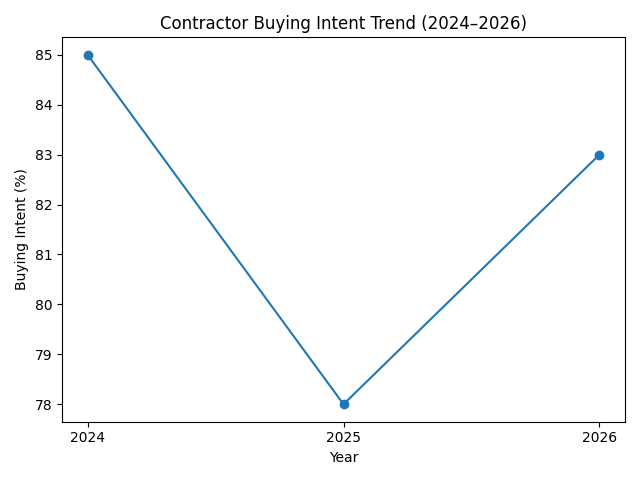
Although contractor purchase intent is still high in 2026, it is more cautious and strategic than in prior years. Although their strategy has changed, buyers are still making investments in fleet expansion and replacement. They now put flexibility, finance, and total cost of ownership ahead of aggressive expansion. Because of this, searches for Construction Equipment For Sale are now more focused and targeted.
Contractors continued to operate with post-boom confidence in 2024. Stable demand was underpinned by high infrastructure spending and project backlogs, and many businesses felt comfortable making new equipment purchases in anticipation of sustained use.
In 2025, that confidence waned. Contractors were compelled to slow operations due to rising interest rates, inflation, and tariff uncertainties. Equipment volumes fell by about 7% in some areas, and a cautious “wait-and-see” attitude spread. In order to minimize long-term commitments, buyers put off making decisions, looked more closely at old equipment, and depended more on rentals.
Although purchasing intent has increased by 2026, attitudes have changed. Although ROI, uptime, and operational efficiency are now the main priorities, almost 83% of contractors still want to buy equipment. In order to ensure steady cash flow, contractors are more willing to lease, purchase secondhand equipment for faster returns, and rent specialized machinery.
The move from an ownership perspective to a performance mindset is the most significant. Contractors are selecting equipment based on how well it supports project execution and financial results rather than just growing fleets. This change has been strengthened by economic pressures, increased funding costs, and developing technologies.
In the end, contractors in 2026 are not avoiding investment; rather, they are making wiser, more deliberate choices where each machine must demonstrate its worth.
What Questions Should Contractors Ask Before They Buy Construction Equipment?
- Fit can be found with a casual glance at Construction Equipment For Sale classifieds. You can determine whether ownership is going to be profitable from that response.
- Next, find out the actual monthly cost, considering depreciation, maintenance, fuel, and finance.
- Find out how quickly parts and services can be provided. Without assistance, a machine is dangerous. Because exit value is just as important as entering pricing, find out what the expected resale value is.
- Additionally, you must inquire about the machine’s compatibility with the project flow. Even a fantastic machine used for the wrong kind of job is a bad investment.
- Dealer support matters too. A contractor should know whether the dealer will stand behind the machine and help when the schedule gets tight.
- Finally, ask whether the tech features are actually useful on your jobsites. Some tools look advanced but do not save time in the field.
What Is The Contractor Purchase Decision Scorecard for 2026?
A straightforward scorecard can greatly improve the clarity of purchasing decisions. After comparing Construction Equipment For Sale choices side by side, some consumers construct it. Each equipment can have its uptime, purchase price, financing, fuel efficiency, dealer support, resale value, tech features, and availability rated by contractors. Comparing machines based on factors that actually impact profit is the aim.
A less expensive system that appears better on paper can lose to one with a high uptime and support score. This scorecard is useful prior to seeing a dealer because of this. It compels the purchaser to consider themselves as an owner rather than a consumer.
When Is The Best Time To Buy Construction Equipment In 2026?
When the machine will be used sufficiently to warrant ownership is the ideal time to purchase. Construction Equipment For Sale supplies, funding, and project scheduling frequently coincide at that point. This typically indicates that the contractor has a well-defined project pipeline and a genuine demand rather than merely a hazy desire to grow. Financing arrangements that meet the budget and don’t strain cash flow are also beneficial.
Dealer inventory is also important. The purchase is more easily justified when the appropriate machine is available and there is robust service support. Additionally, contractors ought to purchase when project demand is sufficiently apparent to lower risk. A machine with planned work is far safer than one purchased on the spur of the moment.
Contractors still have to adhere to budgetary constraints and rate pressure even with active borrowing and financing.
FAQ
What matters most when buying construction equipment?
The most important factors are genuine jobsite performance, finance, dealer support, total cost of ownership, and dependability.
Should contractors rent or lease instead of buying construction equipment?
Yes, in situations when the equipment is transient, seasonal, or unlikely to generate enough revenue to warrant ownership.
How do financing terms affect construction equipment purchases?
They alter the machine’s total cost, cash flow, and monthly affordability.
What technology features in construction equipment are worth paying for?
When they increase uptime and decrease rework, telematics, diagnostics, operator-assist tools, and machine control are worthwhile investments.
Explore MY-Equipment now to compare top-quality options and keep your projects running efficiently with equipment you can trust.
Don’t forget to subscribe to our YouTube channel for more equipment offers and insights into the industry.
 1400 Broadfield Blvd, Houston, TX 77084,
USA.
1400 Broadfield Blvd, Houston, TX 77084,
USA.
 WhatsApp +1-713-304-6013