
 +1-281-934-4000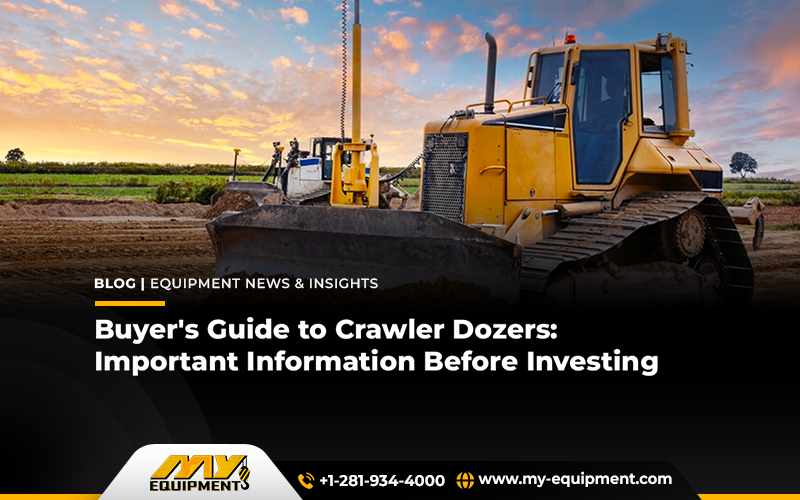
For almost a century, crawler dozers have been a mainstay in the construction sector due to their unparalleled capacity to sculpt terrain and their extreme strength. These devices have undergone significant change over time, having first emerged when early machinists began affixing blades to tracked vehicles. Even though conventional crawler dozers continue to rule heavy-duty tasks and rough terrain, the industry is constantly evolving thanks to innovations like hybrid loader-dozers and small blade attachments for skid steers. It can save time, money, and headaches on the job site to know what to look for in a crawler dozer, whether you are an experienced contractor or an equipment buyer weighing your options.
Knowing How Crawler Dozers Work on Various Terrains
The first step in deciding between a crawler and a wheeled dozer is to evaluate the ground conditions at your job site. When the ground is wet, uneven, or soft, crawler dozers perform exceptionally well. They have better traction on loose soils and hilly terrain because of their wide tracks, which more evenly distribute weight and keep them from sinking. A crawler with an extended undercarriage and wider tracks can handle the task without becoming bogged down, especially when working in swampy areas or digging into a hillside. On the other hand, a wheeled dozer might be a better option if you are working on solid ground and speed is more important than digging depth. It all comes down to matching the dozer to the dirt it is intended to move.
Which Blade Configuration and Dozer Size Make the most Sense to You?
The same is true for dozers; no two jobs are alike. Before choosing a machine, it is important to determine its main function. Are you leveling lots and removing brush, or are you laying the groundwork for more extensive development? Light-to-moderate work may be best suited for a midsize dozer with 100 horsepower, but larger earthmoving jobs may require something with 350 horsepower. Types of blades are also relevant here. The universal (U) blade’s curved design and spill plates make it ideal for carrying material, while the straight (S) blade is excellent for basic leveling. Angle blades for ditching and grading are also available, as are combo blades for versatility. Your machine’s ability to move dirt and complete the task will be impacted by these decisions.
Blade Automation: Does Your Work Need High-Tech?
In most cases, manual blade control will be adequate for simple dozer tasks like clearing lots or rough leveling. In situations where accuracy is required, such as grading a roadbed or preparing a foundation, automated blade systems are crucial. The number of passes needed to complete a task can be significantly decreased with GPS or laser-guided controls. Even the smaller 75-hp machines in many of the newer models have optional grade control packages. Although this type of technology will cost about 5% more, it frequently pays for itself in labor and time savings on the job site.
The Benefits and Drawbacks of Brand Loyalty for Your Search
Because of Caterpillar’s absolute dominance in the dozer industry, the term “Cat” is frequently used to refer to all dozers. They are not, however, the only game in town. Leading manufacturers include LiuGong (Dressta), Liebherr, Komatsu, John Deere, and Case. If you have a trusted relationship with a particular dealer, sticking with that brand might provide extra benefits like dependable after-sales service or familiar controls. You might find unexpected value elsewhere, though, both in terms of features and cost, if you are willing to look around. It’s worthwhile to browse several lots and review specifications online before committing to a purchase.
Considering a bid? Here’s Why It Could Be Beneficial
Auctions provide a way for people on a tighter budget to own heavy machinery without having to pay the high price tag associated with new equipment. Modern auction houses often provide comprehensive inspection reports and even certified condition guarantees to reduce the buyer’s risk. The internet makes it simple to look through used equipment from across the nation or even the globe. Just make sure you know what you want, and be prepared to act quickly when the bidding begins.
When It Makes More Sense to Rent or Lease Rather Than Purchase
Long-term dozer ownership is not necessary for every job or business. Renting or leasing might be a better option if you’re working on a short-term project or are closely monitoring your cash flow. Furthermore, a machine’s storage and transportation logistics become someone else’s concern. Whether you need a week to finish a grading job or a year to develop land for a housing project, the rental terms should fit your needs. But be careful when selecting your machine. If a smaller dozer can’t meet the demands of your job, the allure of the deal won’t last. Additionally, always check the reputation of the rental company’s service staff; reliable equipment is only as good as the team that maintains it.
Looking Over Used Dozers: Where to Put Your Attention
When purchasing used goods, having a professional opinion can make a big difference. Red flags that indicate the machine has been subjected to severe treatment, such as excessive wear on the undercarriage, unusual track leakage, or patched welds on the blade, can be promptly identified by a skilled operator or mechanic. Examine more than just the exterior; new paint can conceal a host of issues. Because it’s frequently the most costly component to replace, the undercarriage in particular merits careful consideration. Request maintenance records as well. You can learn more about the dozer’s dependability from its well-documented service history than from a simple visual inspection.
Budget Breakdown: Expectations at Every Level
A dozer is a significant financial commitment. The starting price for new 9-ton crawler dozers is usually $100,000. At the top end, enormous 115-ton models can cost more than $2 million, while mid-size units in the 15–20 ton range typically command over $200,000. Used equipment is more reasonably priced; small crawlers with few hours can be purchased for $60,000 to $70,000, while heavy units with many hours can still fetch hundreds of thousands. The size and length of the rental vary; machines with 70–100 horsepower typically cost $400–800 per day or $4,500–6,000 per month. Monthly costs for larger machines with 300 horsepower or more can reach $18,000. Manufacturers’ or third-party lenders’ financing programs may provide consumers who meet the requirements with alluring terms, such as zero percent interest or no down payment on new purchases.
 1400 Broadfield Blvd, Houston, TX 77084,
USA.
1400 Broadfield Blvd, Houston, TX 77084,
USA.
 WhatsApp +1-713-304-6013