
 +1-281-934-4000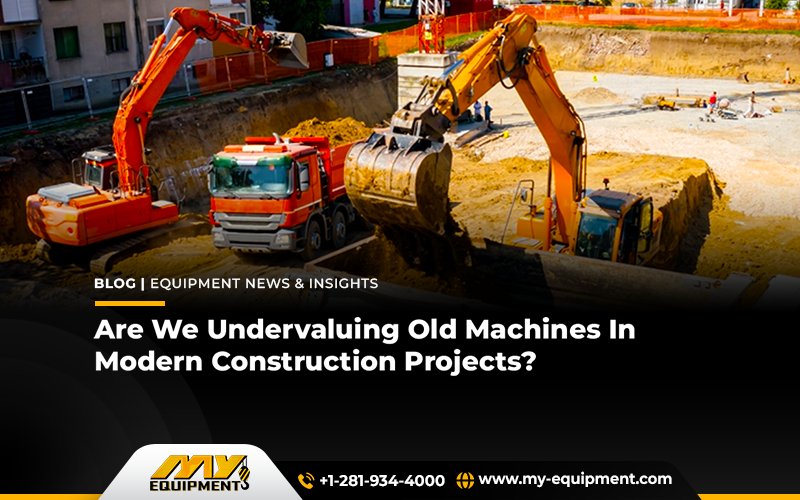
The old machines used in construction are also associated with the image that they are either old or less efficient. Most of the project managers are quick to correlate new equipment to superior performance without a second thought that machines do not have the same maturity. Mechanical maturity is the reduction of the machine parts, which have been put to regular use over the years. Older machines have already passed through preliminary stress periods, have adapted inwardly, and are sometimes predictable as opposed to brand new units. The understanding of this fact may alter the way businesses conduct fleet management, budgeting, and risk analysis. Well-maintained old machines may also form a very reliable investment that can be used to provide a steady output to a current construction project.
The Explanation Of Mechanical Maturity
Mechanical maturity is when the moving parts of a machine have stabilized in the best position. With time, bolts, joints, and metal pieces adapt to the use of repetitive movements, which results in smoother movements. The hydraulic systems, engines, and transmissions tend to stabilize in their performance after prolonged use. This stability makes the unexpected failures less likely and enables operators to forecast the behavior of the machine more precisely. Essentially, a mature machine has already passed through a testing period, which cannot be compared with new equipment. This provides used heavy machinery with unique possibilities in projects that require precision, reliability, and consistent output.
Cost Effectiveness And Depreciation
Merely being older, the old machines tend to be much less expensive to buy than the new ones. New construction machines are those machines whose value is depreciating at a very high rate within the first few years, but on the other hand, mature machines have already recouped most of their value loss. The cost of maintenance and operation is predictable when the project managers engage in investing in older units. This will enable the budgets to go further, enabling businesses to allocate resources in a better way. The mechanical maturity of the machine on most occasions gives a better cost-performance to the purchase of a machine compared to getting a new one, particularly when long-term efficiency and reliability are a consideration.
Established Stability In The Industry
The performance of older machines can be assessed. Operation hours, maintenance records, and known responses to various workloads provide the buyer and the operator with some idea about their reliability. The experienced operators, in most cases, use mature machines since they are familiar with what to expect. Easy foreseeable performance minimizes downtimes and projects run on time. Although new machines might be the most up-to-date in technology, there is always an element of danger in the fact that new machines are unavailable to test their practicality in the real world. Mechanically mature machine, on the other hand, is one whose track record has been proven, and this increases confidence in planning projects.
Maintenance And Long Life Factors
The maintenance of older equipment helps in its prolonged life. Frequent maintenance and inspection, such as lubrication, part replacement, and inspection, will be undertaken to make sure that parts are kept in good working condition. Properly serviced older machines are capable of lasting much longer than they are expected and even exceeding the newer machines poorly maintained. Maintenance practices are affected by thoroughness as far as longevity is concerned. The operators who check the hydraulic systems, engines, and structural parts also make sure that the machine is stable and that it keeps providing high performance. The maturity of a machine, coupled with proper maintenance, will result in a very valuable asset.
Flexibility To Project Requirement
The older machines tend to be versatile and thus can be used in a variety of tasks. Mature machines have controls that are mostly easy to use and simple, which minimizes operator errors. They can be enriched with attachments and modifications to become applicable to various needs of the projects. Such machines have the capabilities to be graded, lifted, excavated, or transport materials without affecting efficiency. Their reliability has been proven and allows project managers to schedule with ease because they are sure that the machine can support the fluctuating requirements of operation. To make sure that the adaptability is not merely theoretical but practical in the environment of the real working conditions, mechanical maturity is guaranteed.
Hidden Performance Advantages
Mechanical maturity has the capability of improving the hidden performance of a machine. The settled components are generally vibrationally smoother, move more smoothly, and are more precise. The hydraulic systems and engines achieve stable operational efficiency. Frames and joints are structural components that gain structural stability and are likely to avoid unforeseen failures. Such nuanced benefits are not necessarily those that can be found on spec sheets, but they can significantly affect the project results. Mature machines have been successfully tried and tested over the years, and their internal modifications have made them less expensive than certain other models that are still within their comfort zones of normal usage.
Risk Management And Predictability
The older machines decrease operational uncertainty. Understanding the behaviour of a machine under load, the behaviour of the hydraulics, and how the transmission manages the stress helps the managers to anticipate maintenance as well as schedule planning. Foreseeable wear patterns, as well as the history of performance, are reducing the possibility of sudden failures that are likely to result in expensive delays. Growing up with a machine lowers the financial/operational risk since the behavior of the machine is more open. In most projects, the stability of an old machine is greater than that of a new machine, which provides confidence in performance as well as budgeting.
Overview:
The age of old machines has been undermined as people assume that they are inefficient. As a matter of fact, the mechanical maturity can offer stability, predictability, and long-term reliability, which new machines may not be able to offer immediately. Older machines can be used in the current construction project since they are a good resource due to proper maintenance, flexibility, and working history. The ability of project managers to inject mechanically mature machines into their fleet can help them a lot in terms of performance, cost efficiency, and risk management. The awareness of the benefits of older equipment is another guarantee that the projects are efficient and reliable, and cost-effective.
 1400 Broadfield Blvd, Houston, TX 77084,
USA.
1400 Broadfield Blvd, Houston, TX 77084,
USA.
 WhatsApp +1-713-304-6013