
 +1-713-304-6013
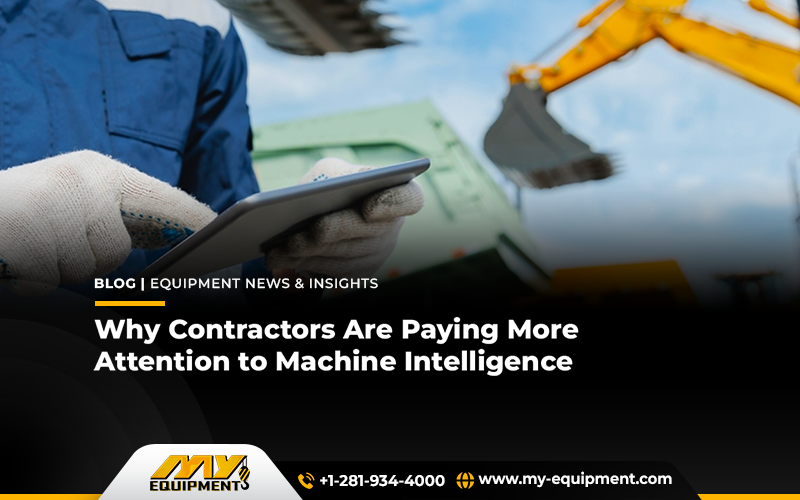
Construction organizations are prioritizing machine intelligence in 2026 due to three financial pressures: workforce shortages, growing insurance prices, and increased demand for equipment with verifiable working histories. Contractors no longer invest in clever machines because they appear futuristic.
They are investing because these technologies help to decrease financial risk, increase production, and protect long-term asset value. Buyers now prioritize linked technology that provide quantifiable business benefits when purchasing new equipment or evaluating used heavy equipment.
What Changed in 2026?
The most significant change in 2026 isn’t a single technology breakthrough. Instead, the convergence of multiple industrial breakthroughs has pushed machine intelligence into daily fleet choices.
Earlier this year, Caterpillar declared that automation and machine intelligence will henceforth serve as the foundation of its autonomous strategy. Rather than viewing artificial intelligence, machine learning, computer vision, and edge computing as experimental features, the company positioned them as key technologies integrated directly into future equipment platforms.
This declaration highlighted a broader industry shift: intelligent machines have formally transitioned from research projects to commercial product roadmaps.
Why Is Machine Intelligence Becoming a Business Issue?
At the same time, contractors continue to tackle issues that have been stubbornly pricey for years. A top executive from a large UK construction company recently stated that the industry’s safety performance has shown no progress over time, while over 20% of construction expenditures are incurred as a result of work that was not completed correctly the first time.
These figures change the discourse on machine intelligence. Instead of being viewed as an invention in and of itself, it has evolved into a practical method for cutting wasteful spending.
2026 stands out as a turning point rather than just another year of gradual advancement due to the mix of known technology, financial strain, and operational necessity.
The Three Forces Driving the Shift Towards Machine Intelligence
1. The Operator Shortage Is Now a Hard Number
There is quantifiable evidence that the lack of workers in the construction business is a real problem. The Associated Builders and Contractors estimates that in order to fulfill anticipated demand, the industry will require an additional 349,000 workers this year. One of the main issues facing contractors today is finding skilled equipment operators.
By providing less experienced operators with automatic controls, ongoing performance feedback, and real-time advice, machine intelligence helps reduce that gap. Onboard diagnostics, machine assistance, and intelligent grading are examples of features that improve consistency while lowering the learning curve.
By minimizing reliance on a dwindling pool of highly skilled workers, these technologies enable contractors buying Used Heavy Equipment to become productive much more quickly.
2. Insurers Are Pricing Machine Data into Premiums
One of the most compelling financial arguments for purchasing linked equipment is insurance. Because verified machine data enhances risk assessment and streamlines claims investigations, builders’ risk insurers are increasingly paying contractors who implement continuous site-monitoring systems.
Contractors can start recovering expenses through reduced insurance premiums and fewer disputes rather than depending only on future productivity increases to justify the investment. In order to produce trustworthy documentation that is advantageous to both contractors and insurers, connected equipment logs operational activity, location, and usage. The way businesses assess technology expenditures throughout their fleets is evolving due to this instant financial return.
3. Safety and Liability Are Increasing the Value of Better Data
Safety is closely connected to both insurance and operational risk. Contractors increasingly need reliable records showing how, where, and under what conditions equipment was being operated.
Machine intelligence and telematics can create a documented operating history instead of leaving companies dependent on manual records alone. This does not eliminate accidents or liability, but it gives contractors better information for identifying patterns, investigating incidents, and improving fleet management.
Does Machine Intelligence Affect Resale Value and Insurance Costs?
Yes, machine intelligence is increasingly influencing both resale value and insurance costs because verified equipment data builds trust throughout a machine’s lifecycle. This is one of the least discussed changes in today’s equipment market, yet it is becoming a decisive factor during buying and selling.
Modern telematics platforms such as Caterpillar VisionLink and Komatsu KOMTRAX provide buyers with far more than an hour-meter reading. They can review operating hours, maintenance intervals, fault-code history, idle time, fuel consumption, and machine utilization.
Why Does Verified Telematics Matter When Buying Used Equipment?
Instead of relying only on inspection reports or seller claims, buyers gain access to objective operating records that reveal how a machine was actually used.
In the market for used heavy equipment, where insufficient maintenance records and manipulated hour meters have historically caused doubt, this transparency is especially beneficial.
A large portion of that information vacuum is filled by verified telematics history, which helps vendors defend higher resale prices for well-maintained machines and gives buyers more confidence to make decisions.
Insurance companies profit from the same validated data. The probability of theft, illegal use, and false claims is decreased by equipment with GPS tracking, telematics, and continuous monitoring. Contractors running connected fleets may be eligible for more favorable insurance terms while safeguarding the long-term value of their assets as underwriting becomes more data-driven.
What This Means When You Are Buying or Financing Equipment
Buying equipment in 2026 requires more than comparing purchase price, horsepower, and hours. Contractors should also consider how connectivity affects operating costs, fleet visibility, financing decisions, and future resale.
New Equipment With Factory-Integrated Connectivity
A new machine with factory-integrated connectivity can make sense for contractors planning long-term ownership. The technology is designed into the equipment, supported by the manufacturer, and typically integrated with the machine’s electronic systems.
Retrofitting Existing Equipment
A telematics retrofit can be practical when an existing machine remains mechanically reliable but lacks modern monitoring capabilities. Contractors can add connectivity without immediately replacing productive equipment.
Buying Used With Verified Telematics
Buying Used Heavy Equipment with a verified telematics history can provide a balance between acquisition cost and operational transparency. Historical data gives buyers another layer of evidence when assessing hours, maintenance, utilization, and machine condition.
Don’t Overlook Data Ownership
Data ownership should also be part of the comparison. Factory-integrated systems and aftermarket telematics solutions can differ in how equipment data is collected, accessed, stored, and shared. Contractors operating mixed fleets should understand these terms before committing to a platform.
The contractors who are benefiting the most are making better financial decisions rather than following technological developments. Explore our selection of Used Construction Equipment with telematics verification to discover machines that offer greater value tomorrow and confidence today.
Frequently Asked Questions
Why are contractors adopting machine intelligence in 2026?
Because labor shortages, insurance incentives, and rising operating costs are creating immediate financial reasons to invest in connected equipment.
Does machine intelligence or telematics lower insurance premiums?
In many cases, yes. Insurers increasingly recognize verified machine data and continuous monitoring as tools that reduce operational risk and improve claims transparency.
Does machine intelligence increase resale value of used equipment?
Yes. Verified service history, operating data, and telematics records help buyers trust the condition of a machine, often improving resale potential for connected equipment.
 1400 Broadfield Blvd, Houston, TX 77084,
USA.

 WhatsApp +1-713-304-6013