
 +1-713-304-6013
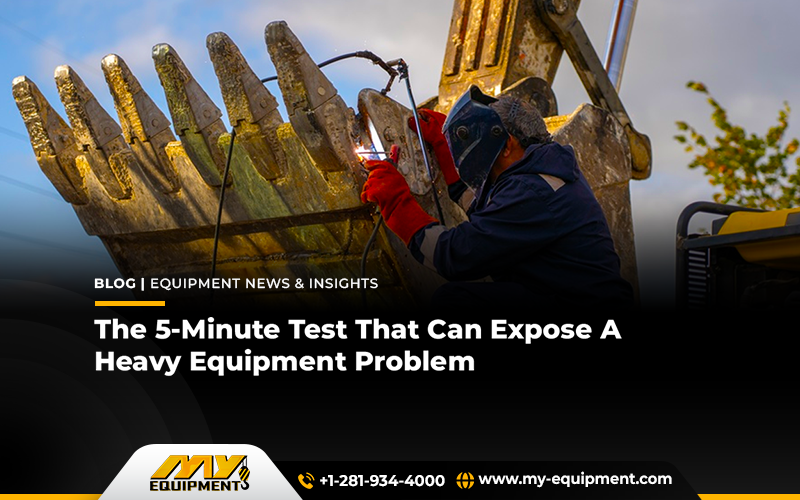
A five-minute test won’t tell you everything about a used construction equipment, but it can show you quickly whether a closer look is needed. Treat it as a screening step before a professional inspection, not a replacement for one. The same steps work on most brands and machine types, including excavators, loaders, dozers and Caterpillar construction equipment.
Safety comes first. Run the test with the seller’s permission, in a clear area, with a qualified operator at the controls and everyone else well clear of the machine. Follow the manufacturer’s manual.
The 5-Minute Test at a Glance
| Step | What to do | Red flag |
| 1. Walk-around | With the engine off, check fluids, leaks, hoses and loose parts | Fresh leaks, damaged hoses, loose or missing parts |
| 2. Cold start | Start cold if you can and listen at idle | Long cranking, steady smoke, unstable idle, knocking |
| 3. First minute | Watch gauges and warning lights, listen for noises | Warning lights, vibration, rattling, whining |
| 4. Main functions | Run each control through its normal range | Hesitation, jerky or slow movement, weak force |
| 5. Light load | Use a controlled load suited to the machine | Big drop in engine speed, slow hydraulics |
| 6. Travel and steering | Drive both ways, compare tracks or check steering and brakes | Pulling to one side, hesitation, noises |
| 7. Two functions together | Run two functions at once | One function slows or weakens |
| 8. Listen after work | Wait a few minutes, listen again, check for new leaks | New noises, new leaks, parts moving harder |
Start With a Walk-Around
Before you start the machine, walk around it with the engine off. Check the level and condition of the fluids, visible leaks, damaged hoses, loose parts and anything that looks different from the rest of the machine. Fresh oil around a seal or fitting is worth noting.
Start the Engine Cold
If you can, start with a cold machine. Pay attention as the engine cranks and settles into idle. Long cranking, steady smoke, an unstable idle or knocking can all point to a problem that shows more clearly once the engine is working.
Watch the First Minute
Let the machine run for a short time and watch how it behaves. Check the gauges and warning lights, and listen for vibration, rattling, whining and other unusual noises. Notice how quickly the engine settles into a steady idle. Look around the engine compartment for new leaks or fluid pushed out of seals and connections. These first observations tell you whether the machine deserves a closer functional test.
Test the Main Functions
Run the main controls through their normal range and watch how smoothly the machine responds. On an excavator, that means the boom, stick, bucket and swing. On a loader, the lift arms and bucket. On a dozer, the blade. Try any attachment too.
Look for hesitation, jerky movement, slow response or weak force at the end of the stroke. A function that feels slower or weaker than the others deserves attention, especially if the machine slows down when you use several functions at once.
Put the Machine Under Light Load
A machine can look fine standing still and behave differently when it has to do work. Use a controlled load that suits the machine and the conditions, and watch the engine, hydraulics, transmission and controls as the load increases.
Problems that don’t show at idle often appear as a big drop in engine speed, slow hydraulic response, heavy vibration or unusual sounds. The aim is to see how the machine performs under normal work, not to push it past its limits.
Test Forward and Reverse
Travel slowly in both directions where you can. Listen for unusual drivetrain noise, and notice how smoothly the machine accelerates, slows and turns. On tracked machines, compare how both tracks respond. On wheeled machines, check steering response, braking, transmission engagement and any odd movement at the articulation joint.
A machine that pulls to one side, won’t reverse, hesitates to move or makes odd noises while traveling needs further testing.
Try Two Functions Together
This is one of the most useful parts of the short test. Run two functions at the same time and see whether either one slows down or weakens. For example, an excavator may swing well and raise its boom well on their own, but slow down when it does both together.
Testing functions together can point to hydraulic flow restrictions, control valve problems, a weak pump or an engine that lacks power. Note exactly which symptom you see and when, because it helps a technician narrow down the cause.
Listen After the Machine Works
Don’t stop once the main functions are done. Wait a few minutes, then listen again for changes in sound and check for new leaks, vibration or parts that seem to move harder than they should. Some problems show up only after the machine has moved and the hydraulic components have cycled several times. A part that seems normal can start to make noise or leak once it is under load.
When Five Minutes Is Not Enough
The five-minute test is a screening step only. A machine that passes can still have internal wear, maintenance problems, structural repairs or parts near the end of their life. Records, physical condition, fluid condition and detailed functional testing still belong in a proper pre-purchase inspection.
The real value of the short test is knowing what to look at next. If the machine starts easily, runs well, performs steadily under load and looks sound, you have more information for the next step. If something feels wrong, don’t treat it as a demonstration. Find the cause before you decide to buy.
Frequently Asked Questions
Can five minutes really expose a heavy equipment problem?
Yes. It can show obvious operating symptoms such as leaks, hard starting, slow hydraulics or odd noises. It can’t find every hidden fault.
Should I test the machine cold?
Yes, when possible. Some starting and running problems are harder to notice once the machine is warm.
What should I listen for during the test?
Knocking, whining, grinding, rattling, vibration, or any change from the machine’s normal sound.
Why test two functions at the same time?
Running two functions together can show hydraulic or engine problems that single-function tests miss.
Is a five-minute test enough before buying used equipment?
No. Use it as a quick screening step, then follow it with a detailed inspection.
What should I do if something feels wrong during the test?
Stop the test, note the symptom, and ask a technician to find the cause before you decide to buy. Don’t keep operating a machine with unsafe brakes or steering.
Test a Machine Before You Buy
Looking for used construction equipment you can check before you commit? MY Equipment lists used Caterpillar construction equipment and other brands, with specifications and photos. Browse used heavy equipment for sale, or book an inspection and appraisal before you buy.
Don’t forget to subscribe to our YouTube channel for more equipment offers and insights into the industry.
 1400 Broadfield Blvd, Houston, TX 77084,
USA.

 WhatsApp +1-713-304-6013