
 +1-713-304-6013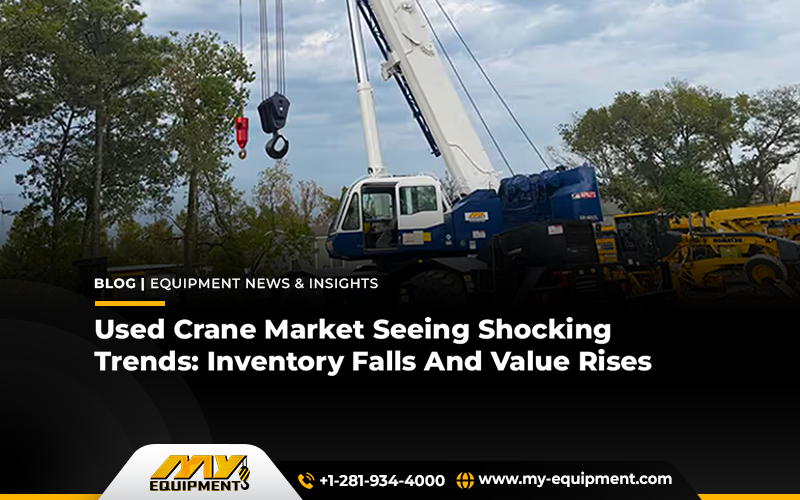
The US market for used cranes is still changing in a way that reflects both increasing buyer confidence and a tightening supply. The figures for October provide a clearer picture of a market where asking and auction prices are continuing to rise while available units are progressively declining. These trends show how competitive the heavy lifting market is becoming, so contractors and fleet managers who are still assessing their 2025 equipment strategy should keep a close eye on them.
How does this crane market trend affect the buyers?
October saw another decline in inventory levels, down 1.53% from the previous month and more than 14% from the same period last year. This consistent decline indicates that fewer units are remaining on the market and that cranes are turning more quickly. This change is partially due to ongoing projects in the industrial and infrastructure sectors, where OEM lead times are still not entirely back to pre-pandemic levels and cranes are still crucial.
Increased competition for well-maintained units and a greater chance of paying closer to seller expectations are typically the results of decreasing inventory for buyers. Additionally, it makes prompt action even more crucial, particularly for specialized crane models that are not widely available.
What is the impact of fluctuation in asking prices?
As inventory declines, sellers appear more certain about keeping or increasing their asking prices. October saw a year-over-year increase of more than 3% as well as a month-over-month increase of almost 1%. These increases show a gradual, steady trend that reflects actual demand rather than a sharp spike of used cranes for sale. This change is already being felt by buyers of late-model cranes, particularly those who are looking for machines with good service records and fewer operating hours.
It appears that sellers are aware of the worth of their equipment in a competitive market based on this steady increase. In order to prevent higher prices later in the year, contractors who are planning equipment purchases for 2026 might want to make decisions as soon as possible.
Why are forklifts more in demand?
The used forklift market is showing interesting trends in addition to crane activity. Following a slower summer period, forklift sales have significantly increased over the last six to eight weeks, according to Sales Manager Matt Sterup. Demand is obviously rising once more, despite the fact that there is still a lot of inventory on hand.
This increase in forklift activity frequently indicates a general improvement in the manufacturing, logistics, and warehousing industries. Many businesses are restocking their material-handling fleets to prevent downtime during their busiest months, as year-end projects and holiday-season operations put additional strain on them.
What is the overall perspective of the used equipment market?
Overall, it appears that the used equipment market is entering a more competitive phase due to the combination of declining crane inventory, rising values, and renewed forklift demand. Compared to earlier in the year, sellers are seeing greater pricing power, and buyers are becoming more active.
This is the ideal time for anyone depending on used cranes or forklifts for future projects to keep an eye on market developments and act fast when the ideal machine shows up.
MY Equipment keeps a careful eye on these trends and offers insights to assist consumers in making wise choices in a market that is changing quickly.
 1400 Broadfield Blvd, Houston, TX 77084,
USA.
1400 Broadfield Blvd, Houston, TX 77084,
USA.
 WhatsApp +1-713-304-6013