
 +1-713-304-6013
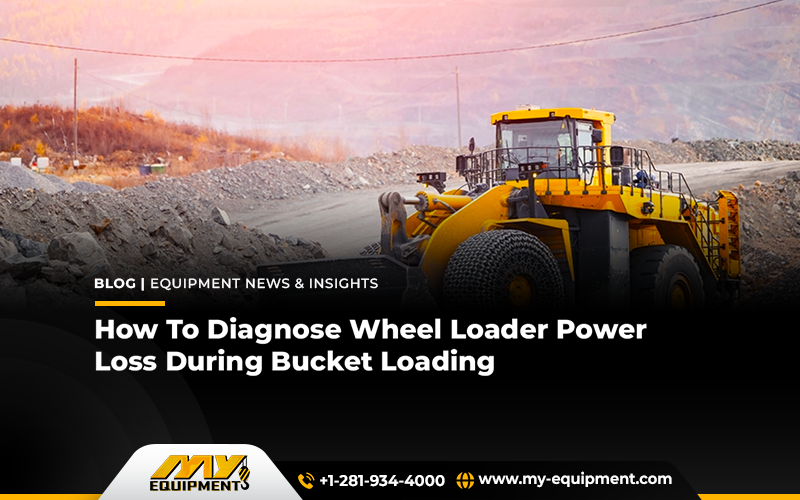
A wheel loader may feel powerful when it’s moving, but lose a significant amount of power when the bucket is in the pile of material. The engine could be having trouble maintaining speed, the machine could be losing push power, or the loader could be failing to generate enough breakout power, even though it is operating normally at lighter loads.
This symptom is worth investigating because bucket loading puts several machine systems under pressure at the same time. The engine, transmission, torque converter, hydraulic system, and tires all play a role in loader performance. When the wheel loader struggles under load, the cause needs to be identified before replacing parts or assuming that the engine is losing power.
Test The Loader Under Controlled Conditions
Start by observing how the wheel loader performs during normal travel without a load. Then, if the operating area is safe, test it against a suitable material pile using the loading technique recommended by the manufacturer. Pay attention to how the machine responds as the bucket enters the material and begins to fill.
Watch for a sudden drop in engine RPM, wheel slippage, difficulty pushing into the pile, or slow bucket movement. These symptoms can point to different problems. Noting which symptom appears first can help narrow down the system that needs further inspection.
Check Engine Performance
If engine RPM drops significantly when the bucket enters the material, begin by checking the engine and its fuel and air supply systems. Restricted air intake, clogged filters, fuel delivery problems, injector faults, turbocharger issues, or internal engine problems can affect performance under load.
Inspect the air intake, filters, fuel system, and engine condition according to the manufacturer’s service procedures. If the loader performs normally during light operation but struggles under heavy load, engine performance should be checked before assuming the hydraulic system is responsible.
For additional maintenance guidance, refer to Caterpillar’s wheel loader maintenance recommendations and follow the service intervals specified for the machine.
Check The Hydraulic System
Bucket lifting and breakout operations depend on the hydraulic system. If the loader struggles to lift a loaded bucket or generate enough breakout force, a hydraulic problem may be responsible, even when the engine appears to run normally.
Check the hydraulic oil level and condition, hoses, cylinders, filters, and visible connections. If the bucket lifts slowly or struggles under load, pressure and flow tests may help identify problems with the hydraulic pump, control valves, or other components. These tests should follow the manufacturer’s service procedures.
Evaluate The Torque Converter
The torque converter transfers engine power to the transmission and allows the loader to deliver torque at low travel speeds. Problems in the torque converter can affect how the machine responds when pushing into a material pile, especially under heavy load.
Observe whether the engine maintains RPM while the loader struggles to move forward or build pushing force. Changes in machine response under load may indicate a powertrain issue, but they do not confirm a torque converter fault on their own. Further testing should follow the manufacturer’s diagnostic procedures.
Check Transmission Performance
Transmission problems can also affect how engine power reaches the wheels. Slipping, delayed engagement, abnormal shifting, or reduced pulling power in a particular gear may indicate that the transmission or related drivetrain components need attention.
Compare the loader’s performance across the operating ranges specified by the manufacturer. If it travels normally under light conditions but struggles when pushing into material, transmission pressure and related drivetrain components may need further testing. Avoid assuming that the transmission is at fault until other possible causes have been checked.
Check Traction And Tires
Not every loss of pushing performance comes from the engine or drivetrain. If the tires slip as the bucket enters the material, the loader may struggle to transfer its available power into forward movement. Poor traction can make the machine feel underpowered even when the engine is operating normally.
Check tire condition, inflation pressure, tread wear, and whether the tires are correctly matched for the machine. Also consider the ground surface and material conditions. A loader working on loose or slippery ground may experience more wheel slippage than the same machine operating on a firm surface.
A regular inspection should also cover tire condition, hydraulic hoses, transmission components, and other critical areas. Refer to this Caterpillar wheel loader inspection checklist for additional inspection points.
Identify The Actual Cause
The goal is to identify whether the problem comes from the engine, hydraulic system, powertrain, or tire traction. Note whether engine RPM drops, the wheels slip, the bucket struggles to lift, or the loader fails to push into the material. These observations help narrow down the possible cause before further testing.
When evaluating a used wheel loader for sale, do not rely only on an unloaded test drive. If conditions allow, observe the machine during a controlled bucket-loading test using the manufacturer’s recommended operating procedure. A loader may travel normally but struggle when working against material resistance. Identifying the cause before purchase can help buyers understand whether the machine needs repairs or is showing normal operating characteristics.
Looking for a used wheel loader for your next project? Explore the wheel loaders available at MY Equpment and contact our team for machine details, availability, and pricing.
FAQs
Why does a wheel loader lose power when entering a pile?
A wheel loader may struggle because of engine performance issues, hydraulic problems, transmission faults, torque converter issues, or poor tire traction. Proper testing is needed to identify the actual cause.
Can hydraulic problems make a wheel loader feel underpowered?
Yes. Low hydraulic pressure or flow can reduce bucket lifting and breakout performance, making the loader feel weak during loading operations.
Can bad tires cause power loss during loading?
Yes. Worn or incorrectly inflated tires can reduce traction. Wheel slippage makes it harder for the loader to transfer engine power into forward pushing force.
Why does the engine RPM drop during bucket loading?
A significant RPM drop under load may indicate restricted air intake, fuel delivery problems, or other engine performance issues. The engine should be checked according to the manufacturer’s diagnostic procedures.
Should a used wheel loader for sale be tested while loading material?
Yes, when it is safe and permitted, a controlled loading test can reveal performance problems that may not appear during an unloaded test drive.
Don’t forget to subscribe to our YouTube channel for more equipment offers and insights into the industry.
 1400 Broadfield Blvd, Houston, TX 77084,
USA.

 WhatsApp +1-713-304-6013