
 +1-281-934-4000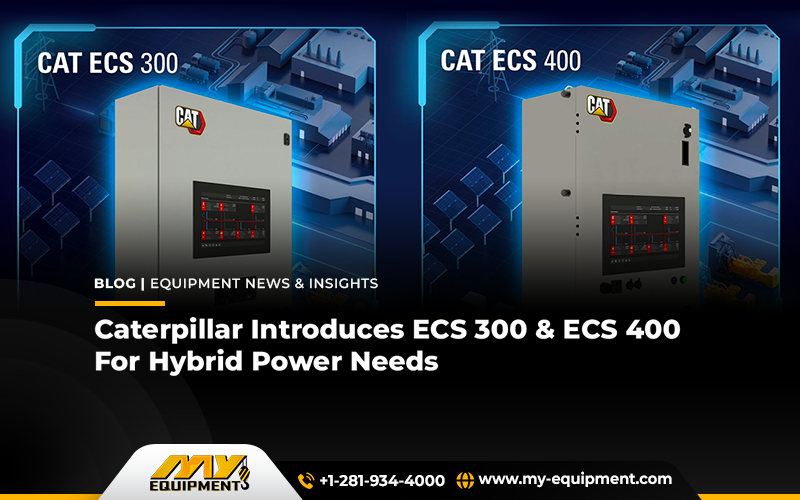
With energy systems changing quickly and sites depending more and more on hybrid configurations, Caterpillar has unveiled two new sophisticated controllers to maintain operations’ effectiveness and preparedness for the future. In order to help users better manage power generation, renewable energy, and storage, all in one smart system, the company has recently added the ECS 300 and ECS 400 to its expanding energy control lineup.
These new products are available at a time when remote facilities, industrial operations, and building sites are moving away from single-source configurations and toward more adaptable and scalable energy strategies. Whether a combination of solar panels, diesel generators, or battery storage, Caterpillar is offering the means to ensure that these systems function as a whole.
ECS 300: Easy, Insightful, and Expandable for Smaller Locations
Sites that oversee up to four power assets are the target market for the ECS 300. It’s perfect for smaller establishments that still require intelligent control over the timing and manner of energy source use. The ability of the ECS 300 to support grid-connected or islanded configurations, that is, to function whether or not the site is connected to a utility, makes it especially valuable.
In order to allow operators to switch between grid and on-site generation as needed, this system is also designed for utility paralleling. For instance, during periods of high electricity demand, the ECS 300 can be set up to prioritize on-site generation or battery storage, and during blackouts, switch to backup generators. In industries where downtime is not an option, that type of control directly supports cost savings, improved fuel efficiency, and continuous operations.
ECS 400: Made for Bigger Facilities and Complex Microgrids
When energy systems get more complicated, the ECS 400 takes over from the ECS 300. Built especially for large-scale microgrids and hybrid installations, this controller supports up to 32 energy assets. Facilities that integrate big battery banks or manage several generators in addition to renewable energy sources like solar or wind are a good fit for it.
These various power sources can cooperate rather than fight for load thanks to the ECS 400. This enables more efficient operation of fuel-based generators, timely use of renewable energy, and intelligent charging and discharging of batteries. To put it briefly, it’s an effective orchestration tool that guarantees each source is contributing at the best possible level.
The ECS 400 helps cut down on needless generator use and overall operating costs by making decisions in real-time based on site demand, fuel availability, and system conditions. With this controller, large jobsites or industrial facilities can achieve sustainability goals without compromising dependability.
ECS 100 and ECS 200 are still in the lineup and are still relevant
Although Caterpillar has added the ECS 300 and 400 for more sophisticated uses, the ECS 100 and ECS 200 are still a significant component of the product line. The ECS 100 is still a dependable choice for single-generator systems that only need basic local control. It’s ideal for remote installations or backup power that doesn’t require intricate energy management.
However, for locations that use up to four generators in parallel, the ECS 200 is a good fit. It facilitates limited grid interaction, load sharing, and simple energy coordination. The ECS 300 or ECS 400 will provide more flexibility and long-term value for operations aiming to scale or add renewables, even though these older systems still function well for smaller facilities.
Caterpillar’s entire energy ecosystem becomes smarter
These new ECS systems are also part of Caterpillar’s larger strategy to provide comprehensive energy solutions. They work seamlessly with Cat generator sets, battery storage, and Caterpillar Distributed Energy Resource Management Systems (DERMS). Advanced remote monitoring tools are also supported, allowing operators to track performance, run diagnostics, and make changes from almost anywhere.
Existing customers can upgrade their older ECS models to the most recent standards using retrofit kits for their CAT construction equipment. For operations that require specialized control solutions based on their site layout and energy objectives, Caterpillar also provides custom system design.
A Better Energy Solution for Companies Planning Ahead
Caterpillar is providing companies with greater control, more intelligent coordination, and the ability to expand their power strategy over time with the ECS 300 and ECS 400. Whether you are managing a sophisticated hybrid microgrid or a lean site with a few energy sources, these systems are made to streamline your operations and provide quantifiable savings.
It is now necessary, not optional, to have control systems that can keep up with the ongoing evolution of energy strategies. With its most recent launch, Caterpillar demonstrates that they are actively influencing the direction of the industry rather than merely keeping up with its demands.
 1400 Broadfield Blvd, Houston, TX 77084,
USA.
1400 Broadfield Blvd, Houston, TX 77084,
USA.
 WhatsApp +1-713-304-6013