
 +1-281-934-4000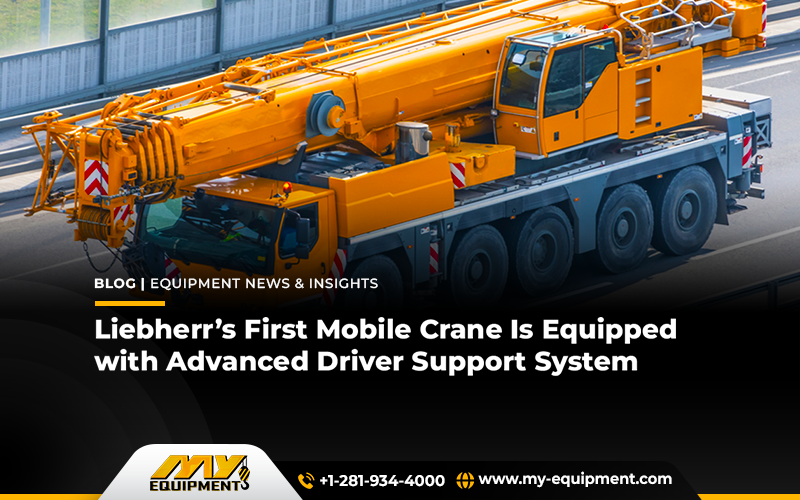
With the introduction of its first LTM 1110-5.2 mobile crane with a fully integrated driver assistance system, Liebherr has made significant progress in crane safety and innovation. It is evident that the LTM 1110-5.2, a landmark machine recently delivered to the Ulferts Group, establishes a new benchmark for crane industry safety, comfort, and intelligent mobility. This release is worth a closer look for fleet owners and contractors who are monitoring the development of jobsite technology.
This crane is designed for safe and smarter operations
The performance of the LTM 1110-5.2 is unique, but so is its ability to think while in motion. The purpose of Liebherr’s latest generation of driver assistance systems is to address the practical visibility issues that crane operators deal with on a daily basis. The system provides real-time alerts for possible blind spot hazards while the crane is driving, turning, or reversing using a sophisticated network of cameras and sensors.
Crane operators are directly benefited by this innovation, according to Temmo Niekamp, joint head of the Ulferts Group. The system assists in keeping an eye on crucial areas surrounding the machine that were previously hard or impossible to see. This eliminates the need for operators to guess or rely solely on mirrors in dangerous traffic scenarios. The increased visibility, along with digital displays and audio alerts, guarantees that operator safety and the safety of nearby cyclists and pedestrians are given top priority.
Address the real-world issues with advanced technologies in cranes
The Moving-Off Information System (MOIS) is one of the safety features included in this model. This feature helps detect people, especially kids, standing in front of the car, which is a frequent but frequently disregarded hazard. Both the machine’s height and the hook block obstruct the driver’s view, so the front cameras take over to give a clear visual feed and alert the driver when movement is detected. The modern digital cockpit display of the crane instantly displays these alerts.
The Blind Spot Information System (BSIS) is equally impressive. It continuously monitors the sides of the crane. Although useful, mirrors are unable to offer full visibility, particularly in congested areas or with heavy traffic. This gap is filled by the new side-mounted cameras, which continuously scan the side zones and notify the operator instantly when an object or person enters these blind spots.
The Reversing Information System (REIS) makes reversing easier as well. When the crane enters reverse gear, REIS is activated to monitor the rear end of the machine and notify the operator of any hazards or impediments in the area. When working on crowded construction sites or narrow access roads, this system provides an essential extra layer of safety.
Experience the modern design with more power and precision
The LTM 1110-5.2 is still a strong, adaptable mobile crane designed for heavy lifting, even with its safety enhancements. This mobile crane for sale combines heavy-duty performance with maneuverability that is suitable for the road thanks to its variable axle load configuration and 60-meter telescopic boom. Liebherr’s new LICCON3 control platform, an easy-to-use, high-performance control interface that streamlines crane operation without sacrificing functionality, is also included for the first time in this model.
From the inside out, the LTM 1110-5.2 exhibits careful engineering designed to lessen operator fatigue and boost productivity. With these developments, Liebherr is changing what people should anticipate from a contemporary mobile crane rather than merely modifying crane design.
What does this new crane tech bring to the industry?
An important turning point in the construction industry has been marked by the introduction of Liebherr’s first mobile crane equipped with a full suite of driver assistance technologies. These systems are a novel approach to safety, awareness, and operator support; they are not merely accessories. Liebherr is assisting in the transition to a safer, smarter, and more effective era of crane operation by proactively addressing visibility risks and reducing the workload for crane operators.
For businesses that prioritize both efficiency and creativity, the LTM 1110-5.2 provides a compelling illustration of the future direction of mobile crane technology. These kinds of machines will undoubtedly be crucial in determining the direction of construction equipment in the future as jobsite demands increase and safety regulations become even more important.
 1400 Broadfield Blvd, Houston, TX 77084,
USA.
1400 Broadfield Blvd, Houston, TX 77084,
USA.
 WhatsApp +1-713-304-6013