
 +1-281-934-4000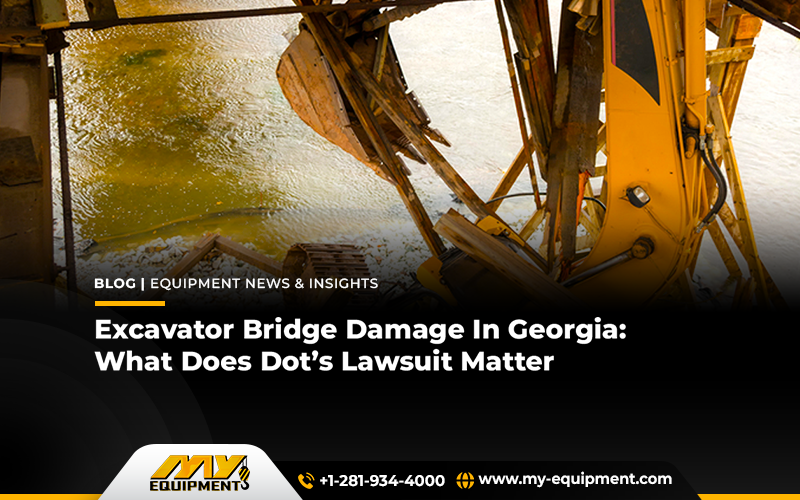
In Georgia, a recent case involving damaged infrastructure and heavy machinery has taken an unexpected turn.
After a legal battle that initially sought damages exceeding one million dollars, the Georgia Department of Transportation (GDOT) has quietly withdrawn its lawsuit against Mike Adams Towing Company.
Many people working in the transportation and equipment industries are wondering why the case was dropped and what this means for similar disputes in the future.
What made the legal action start in this case?
In May 2021, a truck driven by Mike Adams Towing collided with the underside of a bridge on Huber County Road while transporting an excavator in Twiggs County, according to GDOT, which filed the lawsuit.
The initial filing stated that the bucket arm of the excavator had not been lowered to a safe level, which resulted in a collision with the structure and serious damage.
According to GDOT, the driver was negligent under Georgia law for not ensuring safe clearance before passing beneath the overpass, and the estimated cost of repairs was $1.07 million.
This type of incident is a clear example of rule violations. If everyone follows the protocols and all the standard regulations set by the authorities, such an incident won’t happen.
How was the lawsuit abruptly terminated?
Can you even imagine how dangerous it would be? The incident is one of its kind and can cause further damage, but luckily, no casualty was found but the damage was overestimated.
The towing business and its driver responded by denying any responsibility, claiming they lacked sufficient knowledge to support or refute the claims.
The case was dismissed without explanation, according to court records, even though GDOT had requested a jury trial and damages compensation.
The concerned department has still not made anything clear regarding the dismissal of the lawsuit, which is raising more questions. No one can believe such cases could be dismissed without any legal proceedings.
However, the negligence can not be avoided as the proper investigation is a much-needed element in this case.
Do we have enough answers for the raised questions?
This development is significant not only because of the result but also because of the issues it brings up. In equipment transport accidents, proving negligence frequently depends on specifics like load height, bridge clearance measurements, and transport process documentation.
The pursuit of a protracted trial may become more difficult than advantageous if any of these elements are ambiguous or up for debate.
Additionally, GDOT’s decision to withdraw might have been impacted by insurance negotiations or procedural obstacles.
What should equipment dealers learn from this incident?
This case serves as a reminder to equipment transporters, fleet operators, and Heavy equipment traders of how important it is to take every precaution when moving large machinery.
It is necessary to secure and lower loaders, excavators, and similar equipment to the safest profile prior to transportation.
Accidents can be avoided and legal issues can be avoided by keeping accurate inspection logs, training drivers, and documenting safety protocols.
How will the industry take this incident?
The case also demonstrates the wider connection between the State’s infrastructure-related agencies and the businesses entrusted with transporting large machinery on public roads. The cost of repairing bridges is high, and states are becoming more watchful of recouping losses from private operator incidents.
However, when evidence is hard to provide or settlements are reached out of court, even government agencies may abandon litigation, as this dismissal demonstrates.
The Georgia case, taken as a whole, highlights the obligations and hazards associated with the logistics of heavy machinery.
The message for the industry is apparent, even though the legal outcome may not be known for some time: thorough planning, rigorous adherence to safety procedures, and appropriate documentation continue to be the most effective safeguards against mishaps and expensive legal disputes.
 1400 Broadfield Blvd, Houston, TX 77084,
USA.
1400 Broadfield Blvd, Houston, TX 77084,
USA.
 WhatsApp +1-713-304-6013