
 +1-713-304-6013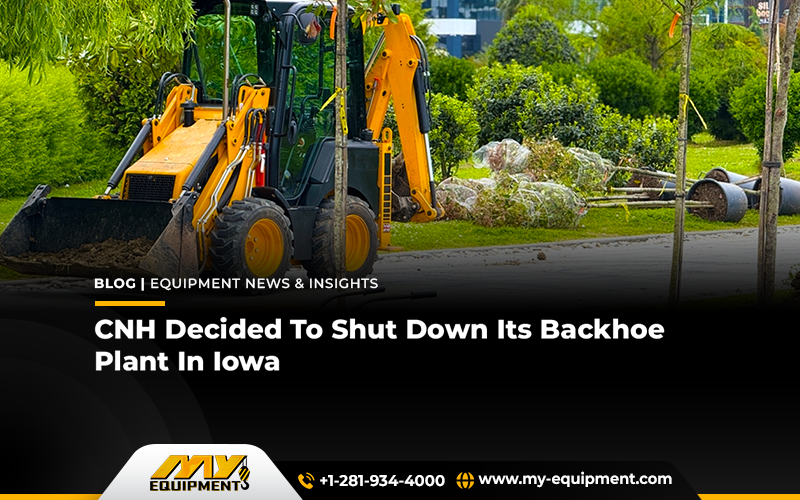
Another big news coming out from the construction equipment industry. CNH Industrial has just decided to shut down its backhoe manufacturing unit in Iowa. The plant was used to assemble the parts locally to reduce the import cost and taxes. It is expected that the plant will completely shut off by the second quarter of 2026.
Is low demand a reason for this plant shutdown?
Many people are still confused, trying to figure out what the actual reason behind this big decision is. The Iowa factory has been making rough terrain forklifts, utility tractors, and diesel and electric backhoes for the past decade.
However, CNH has seen a dramatic drop in demand for backhoe loaders in recent years; since 2014, the company has reported a 47% decline. Sales of other compact equipment, such as compact track loaders and skid steers made at other CNH facilities, have increased by almost 70% in contrast. Due to this major change in the market, Burlington CNH is now the least used and most costly plant to run, which ultimately influenced the decision to close it.
The decline also reflects changing customer preferences in the construction industry. Many contractors and rental companies are leaning toward smaller, more versatile compact machines that better suit modern jobsite needs.
As the demand for a backhoe loader for sale continues to weaken, CNH has been consolidating production in more cost-effective locations to improve efficiency and align its operations with current market trends.
How did the production record change?
Over time, the production lines at the Burlington plant have changed. After closing its Calhoun, Georgia, plant, CNH invested $24 million to expand the facility in 2015 to make room for the M Series dozer line. But in 2021, the M Series dozers’ manufacturing was once more relocated, this time to CNH’s Belo Horizonte, Brazil, facility. There was doubt regarding Burlington’s long-term position in CNH’s manufacturing strategy as a result of that change, which marked a gradual restructuring of the company’s North American operations.
What influence will employees face?
About 200 workers, many of whom have worked for the company for years, will be impacted by the closure. According to CNH, the company is still dedicated to helping its employees get through this change.
To assist impacted workers in finding new opportunities, the company intends to offer job training programs, extended health insurance, and severance packages. These actions were included in the support packages that were negotiated and created in collaboration with the UAW.
Only a few years have passed since a significant labor dispute between CNH and its employees. Workers at the Burlington and Racine, Wisconsin, facilities went on strike for nine months in 2022, calling for improved wages and working conditions.
When workers approved a three-year contract that would expire in May 2026, the strike came to an end in early 2023. The announcement of the plant’s closure was a shock to many of these employees.
How does CNH keep its dedication to domestic production?
CNH maintains its commitment to its U.S. operations in spite of the Burlington shutdown. Over the next five years, the company intends to invest close to $5 billion in its American research and manufacturing facilities.
This investment will strengthen CNH’s position as a significant player in the domestic construction and agricultural equipment markets by providing support to over 8,000 employees throughout its U.S. network.
In order to give workers time to come to terms with the closure, CNH temporarily stopped production at the Burlington site. Production is anticipated to continue until the plant’s official shutdown, and workers will be paid during this time.
Through its engineering and testing division, which includes a proving-grounds site for continuous product development and research, CNH will continue to have a presence in Burlington even after operations cease.
 1400 Broadfield Blvd, Houston, TX 77084,
USA.
1400 Broadfield Blvd, Houston, TX 77084,
USA.
 WhatsApp +1-713-304-6013